Thursday, August 28, 2014

Tooth plaque provides unique insights into our prehistoric ancestors' diet

An international team of researchers has found new evidence that our prehistoric ancestors had a detailed understanding of plants long before the development of agriculture. By extracting chemical compounds and microfossils from dental calculus (calcified dental plaque) from ancient teeth, the researchers were able to provide an entirely new perspective on our ancestors' diets. Their research suggests that purple nut sedge (Cyperus rotundus) -- today regarded as a nuisance weed -- formed an important part of the prehistoric diet.

Source: http://feeds.sciencedaily.com/~r/sciencedaily/health_medicine/dentistry/~3/K0w_Gk-iuvI/140716141047.htm

teeth implants implant teeth teeth implant cosmetic dental surgery maxillofacial surgeons

Coconut Oil To Help Prevent Tooth Decay

gd_coconutA research team from the Athlone Institute of Technology in Ireland has found that coconut oil treated with enzymes was effective in stopping the growth of cavity-causing bacteria. The enzyme-treatment process simulates what the coconut oil properties would be like if it were digested.

This new discovery is expected to lead to a new approach to dental hygiene products. People who are sensitive to chemical additives may be able to use the treated coconut oil more readily. Current microbial infections are getting more anitbiotic-resistant, which means that scientists will need to find new ways to combat them.

The post Coconut Oil To Help Prevent Tooth Decay appeared first on Gentle Dental.

Source: http://www.gentledentalgroup.com/2014/07/coconut-oil-to-help-prevent-tooth-decay/?utm_source=rss&utm_medium=rss&utm_campaign=coconut-oil-to-help-prevent-tooth-decay

dental implant surgery mouth surgery tooth implant procedure dental news dental implant procedure

Fighting for oral dominance: Good fungi keep bad ones in check in healthy mouths

Human mouths contain a balanced mix of microbes which, when disrupted, can lead to oral diseases. A new study compares the bacteria and fungi present in the mouths of healthy individuals with those from patients infected with HIV and illustrates why oral candidiasis (aka 'thrush') is a common complication of HIV infection.

Source: http://feeds.sciencedaily.com/~r/sciencedaily/health_medicine/dentistry/~3/y-F3IpU0fjA/140313173505.htm

dental implant surgery mouth surgery tooth implant procedure dental news dental implant procedure

Craze Lines: Hairline Cracks In Your Front Teeth

Catherine recently left a comment asking about the discolored lines that she has running vertically in her front teeth.  She was curious about what kinds of solutions there are to deal with this cosmetic problem.

Before I talk about the solutions to these lines that can occur in our teeth, I'll give an overview of what they are, why they happen, and how to get rid of them.

Craze Lines: Vertical Lines in Our Teeth

These vertical lines in her front teeth are actually known as craze lines.  Over years of use, our teeth tend to develop tiny cracks in the hard outer layer known as enamel.  These cracks normally don't cause any pain, but can easily stain, causing embarrassing discolored lines on your front teeth.

What Causes Craze Lines?

Craze lines can be caused by stress placed on a tooth.  This can happen over the course of a lifetime of chewing or by any other process that causes a lot of stress on our teeth.

Some common causes of craze lines are  biting your nails, grinding your teeth (many people do it in their sleep without realizing it), using your teeth as tools, trauma to your teeth, or simply routine use of your teeth.

In Dr. Cohen's textbook about root canals, he states, "Craze lines are merely cracks in the enamel that do not extend into the dentin and either occur naturally or develop after trauma."

This case report describes a situation where craze lines were caused by biting on hard objects such as the top ring of an aluminum soda pop can. Speaking of metal rings, wearing tongue rings can cause craze lines in your teeth.

Interestingly, some research points to temperature changes as a possible cause of craze lines.  That's a great incentive  to not chew ice cubes (especially after drinking hot coffee!)

One other cause of craze lines that should be discussed is going to the dentist.  This research article states that he process of drilling away a cavity and filling a tooth can cause craze lines.  That's certainly not a reason to avoid the dentist, though, since craze lines are harmless whereas untreated cavities can lead to significant complications.

Do Craze Lines Mean Your Teeth are Cracked?

Although craze lines are very tiny cracks in the outermost layer of your tooth, you don't need to worry about your tooth cracking in half.

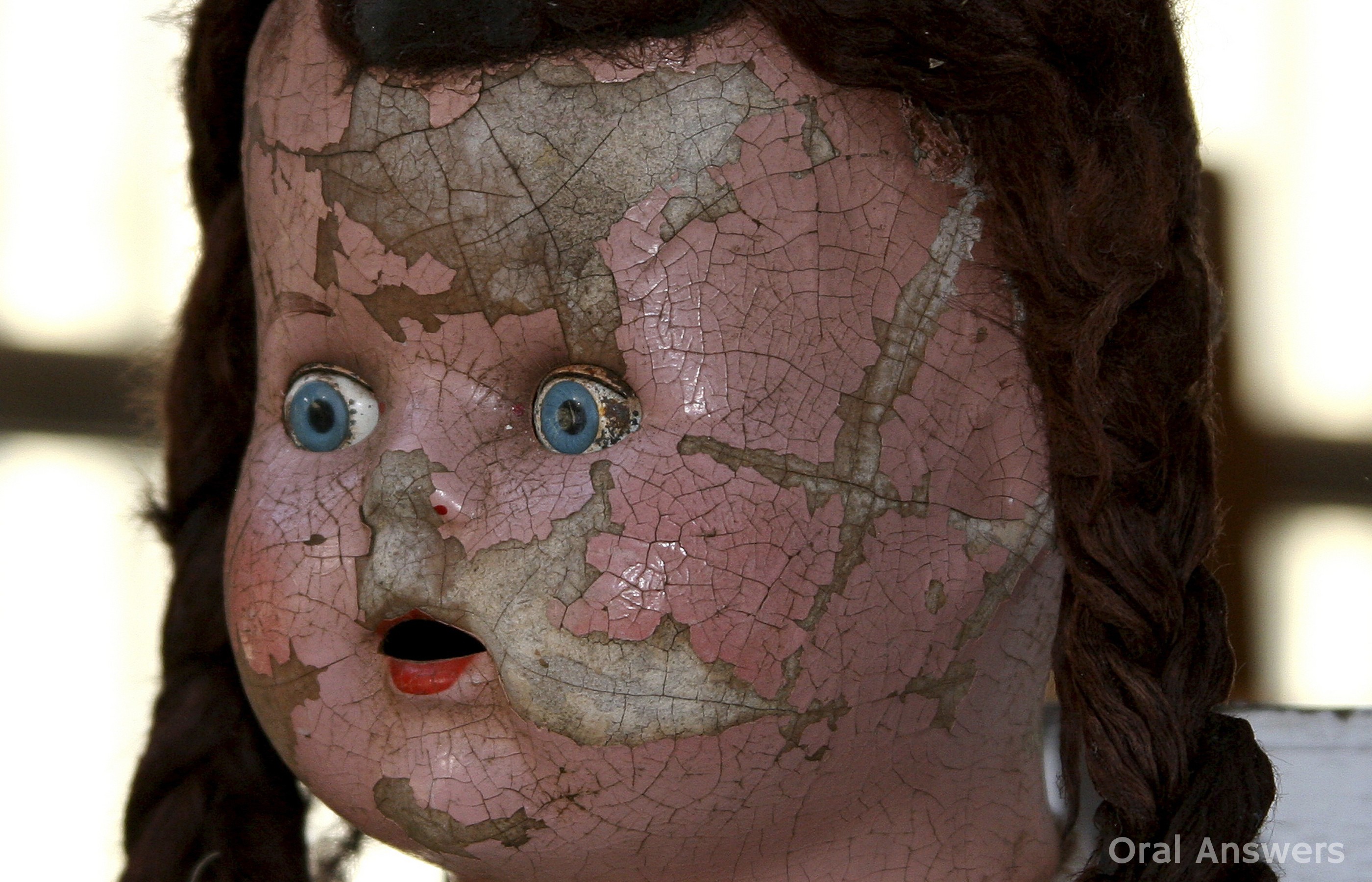
Porcelain Crazing on Doll

One good way to think about craze lines is to take a look at the above photo of this porcelain doll.  The cracks in the porcelain occurred after years of use.  Although they are cosmetically displeasing, the cracks don't mean that the doll's head is about to crack open!

If you suffer from craze lines, you'll be pleased to know that the way that our teeth forms makes the enamel highly resistant to cracking.

A recent study looked at the crack resistance of the enamel in our teeth compared to a synthetic enamel.  The study concluded, "While enamel is the most highly mineralized tissue of the human body, the microstructural arrangement of the prisms promotes exceptional resistance to crack growth."

If that isn't enough, this study says that "The microstructure of enamel is functionally optimized to guide cracks from the more brittle outer enamel inwards where they experience higher growth resistance and are prevented from causing fracture and chipping."

This study found that enamel is about three times as tough as the naturally-occurring crystals of hydroxyapatite (the crystal that our tooth is made from.)
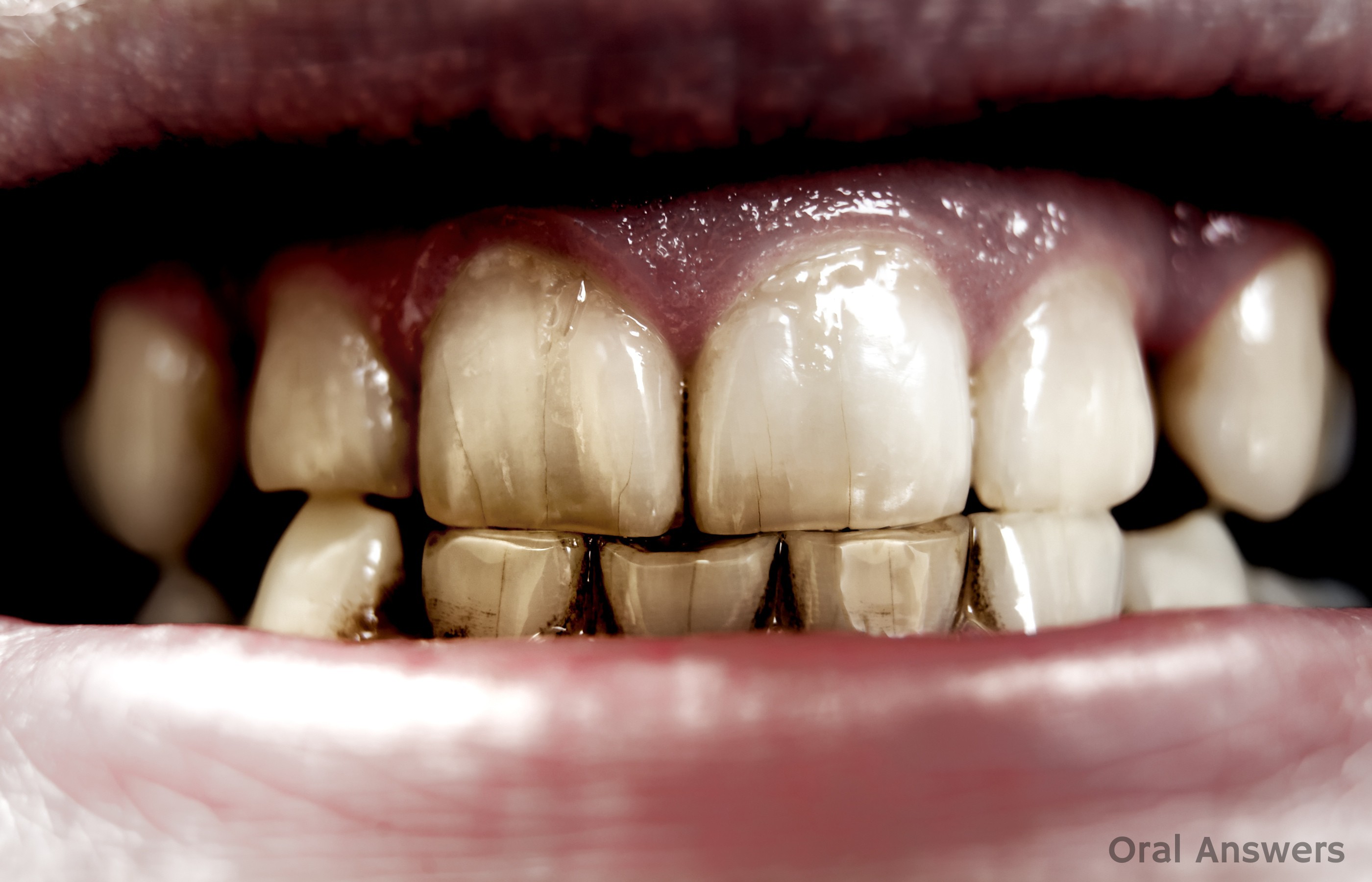
Craze Lines Appearing on Stained Teeth

Enhanced image of stained teeth to emphasize prominent craze lines

How to Get Rid of Craze Lines

So, what should you do if you have craze lines and you hate how they look?  There are a few alternatives.

The least invasive option is to try teeth whitening.  Many craze lines show up because tiny amounts of debri get into the crack and stain the crack, making it visible.  Teeth whitening can bleach away the stain and make the craze lines very hard to detect.

There are other options that involve actual dental work.  Before trying these options, it's good to keep in mind that craze lines can be caused by dental work, and that no dental work is better than your natural teeth.

These options include having an aesthetic tooth-colored filling material placed over the crack or having a veneer.  To do the filling, your dentist will simply smooth down the tooth in the affected area and add some filling material that is the same color as your natural tooth.  To do a veneer, your dentist will smooth down the whole face of the tooth and place a thin piece of porcelain over the tooth (kind of like a fake fingernail.)

Conclusion

With these alternatives in mind, it's worth noting that most dentists agree that there's no need to treat craze lines since they rarely lead to further breakdown of the tooth.  Some studies (like this one) do argue that the small lines may serve as a future site of a cavity, but if you're going in for your regular check-ups, your dentist can usually detect potential problems.

Do you have any questions about craze lines or cracks in your teeth?  Leave a comment in the comments section below.  Thanks for reading!

Top Photo © guentermanaus/Shutterstock.com
Porcelain Doll Photo © Paul Burdett/Shutterstock.com
Bottom Photo © Piotr Sikora/Shutterstock.com

Source: http://feedproxy.google.com/~r/OralAnswers/~3/8XHdFHxc8fg/

maxillofacial oral surgery dental oral dental surgery dental oral surgery dentalimplants

Wednesday, August 27, 2014

Osteoporosis drugs appear to impede cell membrane repair

A class of drugs widely used to treat osteoporosis appears to impede a cell's ability to repair a protective outer membrane that helps determine what enters and exits, researchers report. The inability to quickly repair a membrane is lethal to a cell and may help explain the rare and serious side effect of jawbone destruction that can occur following dental work in patients taking these drugs, the researchers note.

Source: http://feeds.sciencedaily.com/~r/sciencedaily/health_medicine/dentistry/~3/5KnctDzF6qI/140414123816.htm

tooth extraction cost orthognathic surgery mini implants tooth replacement dentures implants

Gum disease bacteria selectively disarm immune system, study finds

Bacteria responsible for many cases of periodontitis cause an imbalance in the microbial community in the gums, with a sophisticated, two-prong manipulation of the human immune system, research shows. Not only does the team's discovery open up new targets for periodontitis treatment, it also suggests a bacterial strategy that could be at play in other diseases involving dysbiosis.

Source: http://feeds.sciencedaily.com/~r/sciencedaily/health_medicine/dentistry/~3/sEhCj91C18E/140611132044.htm

dental implants what are dental implants implants dental dental services implant dental

Byproducts of bacteria-causing gum disease incite oral cancer growth, study shows

Researchers have discovered how byproducts in the form of small fatty acids from two bacteria prevalent in gum disease incite the growth of deadly Kaposi's sarcoma-related lesions and tumors in the mouth. High levels of these bacteria are found in the saliva of people with periodontal disease, and at lower levels in those with good oral health -- further evidence of the link between oral and overall physical health. The discovery could lead to early saliva testing for the bacteria, which, if found, could be treated and monitored for signs of cancer and before it develops into a malignancy, the researchers say.

Source: http://feeds.sciencedaily.com/~r/sciencedaily/health_medicine/dentistry/~3/-i2gefN5MPw/140225122506.htm

denture implants dental bridges implant dentists dental problems tooth extraction cost

Stem cells from teeth can make brain-like cells

Researchers have discovered that stem cells taken from teeth can grow to resemble brain cells, suggesting they could one day be used in the brain as a therapy for stroke.

Source: http://feeds.sciencedaily.com/~r/sciencedaily/health_medicine/dentistry/~3/TOKhpMYrxu8/140430192527.htm

teeth extraction maxillofacial oral surgery dental oral dental surgery dental oral surgery

Dentist4Sedation.com is Offering Information about Various Sedation Dentistry Options

Dentist4Sedation.com offers information about different types of sedation dentistry.

Source: http://www.dentalprnews.com/medical_dental_articles/2014/08/dentist4sedationcom-is-offering-information-about-various-sedation-dentistry-options-392142.htm

wisdom tooth removal cost dentist dental implants dental solutions oral dentist surgery oral surgery dentist

Your Family Dentist, PC Replaces Missing Teeth With Dental Implants

Dr. Yati Yadav informs patients about dental implants and why, in most cases, they are the best option for replacing missing teeth.

Source: http://www.dentalprnews.com/medical_dental_articles/2014/07/your-family-dentist-pc-replaces-missing-teeth-with-dental-implants-390559.htm

maxillofacial surgeons dental surgeon dental surgeons oral dental surgeon dental oral surgeon

Tuesday, August 26, 2014

What’s Your Excuse?

  At Orchard Maple Family Dental, we cannot even tell you how many times we’ve heard people say things like…. “I’ve been meaning to make an appointment but I just haven’t gotten around to it.” With that in mind, here are some of the most frequent excuses people have for not visiting the dentist.   [...]

Source: http://www.omfdental.com/blog/2014/excuse/?utm_source=rss&utm_medium=rss&utm_campaign=excuse

oral surgery dentist dentist oral surgery dental implant surgery mouth surgery tooth implant procedure

Gum disease bacteria may cause heart disease

The same bacteria that cause gum disease also promotes heart disease -- a discovery that could change the way heart disease is diagnosed and treated. Heart disease is the leading cause of death in the North America. Gum disease affects 46 percent of the U.S. population and is caused by bacteria that grow on the teeth under the gums. Although doctors know that patients with gum disease are at higher risk for heart disease, gum disease isn't viewed as a traditional risk factor for heart disease.

Source: http://feeds.sciencedaily.com/~r/sciencedaily/health_medicine/dentistry/~3/WksFpbfElD4/140518164339.htm

implant dentists dental problems tooth extraction cost orthognathic surgery mini implants

No One Is Safe From Morning Breath!

couple-brushing-teeth200X166

Morning breath is just a fancy way of saying bad breath. Don’t worry, it’s common – everyone gets it and there is nothing to be ashamed of. Although you cannot stop it from happening, there may be some ways to reduce the odor.

In order to minimize bad breath, you have to first understand why it happens. When your are sleeping, the normal flow of saliva decreases. This causes your mouth to dry out, providing the perfect atmosphere for odor-producing bacteria to multiply. Unfortunately, this means that no one is safe from morning breath.

Here are a few tips to help fight bad breath:

  • Drinking plenty of water throughout the day and before bed will help keep your mouth from drying out, helping to lessen bad breath. 
  • Avoid certain foods that leave a strong aroma in your mouth. Garlic and onions are the most common. The smell lingers in your mouth and is more difficult to get rid of. 
  • Chewing sugar-free gum helps to increase the flow of salvia. This is another way to prevent dry mouth. 
  • Brushing your teeth helps to remove the odor-causing bacteria between your teeth and on your tongue. Make sure to brush for at least two minutes and then go right to bed. Avoid eating or drinking after brushing so you are not leaving anything in your mouth while you sleep. 
  • Flossing before bed is as equally as important as brushing. It’s the only way to remove food particles from between the teeth and under the gums. 
  • Rinsing with mouthwash for 30 seconds helps to kill the bacteria in your mouth that causes odor. 
  • Visiting your dentist regularly is very important. Although bad breath is normal, if you continue to have really bad morning breath, this may be a sign of tooth decay or periodontal disease (gum disease). 


 As simple as these steps may be, many people ignore them resulting in bad breath. The most effective way to combat morning breath is with proper oral hygiene.

Remember, morning breath is normal. There is no reason to be embarrassed – everyone gets it!


The post No One Is Safe From Morning Breath! appeared first on Gentle Dental.

Source: http://www.gentledentalgroup.com/2014/06/one-safe-morning-breath/?utm_source=rss&utm_medium=rss&utm_campaign=one-safe-morning-breath

dental surgeons oral dental surgeon dental oral surgeon facial surgery dental oral surgeons

A Sticky Situation?

  Is gum chewing a healthy or dangerous habit? This is a question which we are asked quite often. And the answer is…..both! Here are some facts about gum chewing, and we’ll let you decide the answer! RISK: Many gums contain sugar, which may taste great, but cause tooth decay (cavities) and other health-related problems. [...]

Source: http://www.omfdental.com/blog/2014/sticky/?utm_source=rss&utm_medium=rss&utm_campaign=sticky

dental implants what are dental implants implants dental dental services implant dental

Researchers Identify Aggressive Genes in Oral Cancer

Researchers from the Washington University School of Medicine in St. Louis have recently discovered a way to predict the aggressiveness of oral cancer tumors in mice which is an important step towards doing...

Source: http://blogohj.oralhealthjournal.com/clinical/medical-news/researchers-identify-aggressive-genes-in-oral-cancer

teeth implants implant teeth teeth implant cosmetic dental surgery maxillofacial surgeons

Dentistry: Resin infiltration effects in a caries-active environment -- two-year results

Researchers found in a pilot study that infiltration successfully stabilized early non-cavitated lesions in a small population with high caries-activity. Continuing follow-up may further confirm its efficacy. This pilot study identified important promising trends between the plaque and salivary metabolomes from caries-active and caries-free children, despite a relatively low number of subjects.

Source: http://feeds.sciencedaily.com/~r/sciencedaily/health_medicine/dentistry/~3/dH8wfglRls4/140320111905.htm

dental implant oral surgeon tooth extraction implant dentistry dental treatment

Monday, August 25, 2014

Leading Dentist in Lexington Celebrates More Than Three Decades in Dentistry

Lexington, KY dentist is excited to celebrate 34 years practicing general dentistry at his thriving office on "Prosperous Place."

Source: http://www.dentalprnews.com/medical_dental_articles/2014/08/leading-dentist-in-lexington-celebrates-more-than-three-decades-in-dentistry-391218.htm

implants teeth teeth implants implant teeth teeth implant cosmetic dental surgery

Tooth extraction prior to cardiac surgery may increase risk of adverse outcomes

Removing an infected tooth prior to cardiac surgery may increase the risk of major adverse outcomes, including risk of death prior to surgery, even though the practice is relatively routine. This research points to a significant departure from current understanding, guideline and practice, and the authors note that further research is required before recommendations and practice are changed.

Source: http://feeds.sciencedaily.com/~r/sciencedaily/health_medicine/dentistry/~3/8PH5rNM4zR8/140227091244.htm

dental extractions implant dentures gum surgery maxillofacial jaw surgery wisdom tooth removal cost

Chapter 5: Researching Medical Tourism

I really did have the notion that I *might* get enough of a book advance for Beauty from Afar to take a budget tour of the world's best hospitals. As it turned out, I didn't get quite that much and the advance payment mostly went for things like food and shelter.

Source: http://feedproxy.google.com/~r/BeautyFromAfar/~3/N2-WSr3iONw/

dentistry implants cosmetic dentistry tooth implant implant tooth cosmetic dentist

Tooth loss linked to depression, anxiety

Tooth loss from caries and periodontal disease is an outcome from complex, chronic conditions. Several biopsychosocial factors are involved, including accessing care. Individuals reporting dental anxiety may avoid dental care; and individuals with depression may be negligent in self-care. In this study, researchers examined a potential association of tooth loss with depression and anxiety.

Source: http://feeds.sciencedaily.com/~r/sciencedaily/health_medicine/dentistry/~3/A3pclBgM6Es/140320111903.htm

dental oral surgeons maxillofacial surgeon oral maxillofacial surgeon oral and maxillofacial surgeon dentistry oral surgery